Home Book Art Quilts About Quilt Repair Mending and Lessons Lectures and Workshops Quilt History Costumes Resumé Contact
 |
 |
Lectures and Workshops
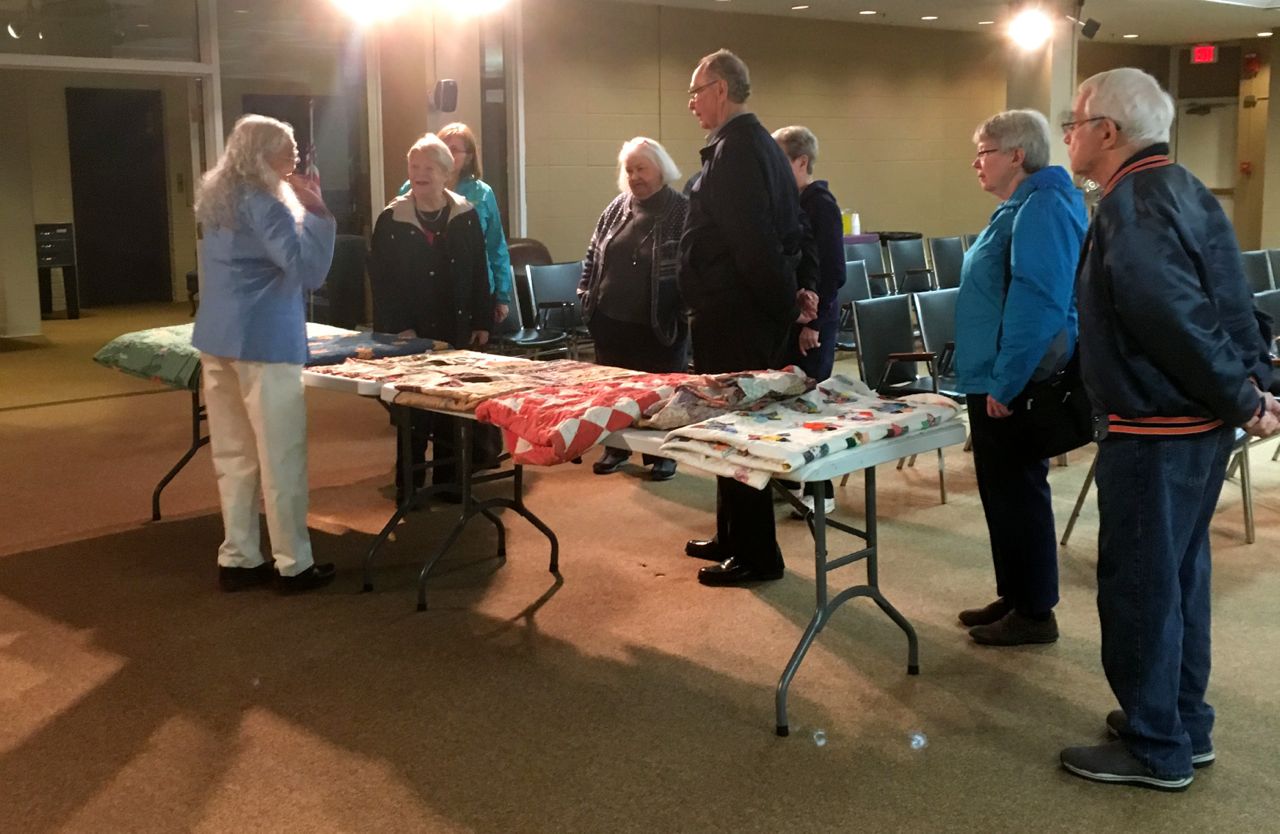
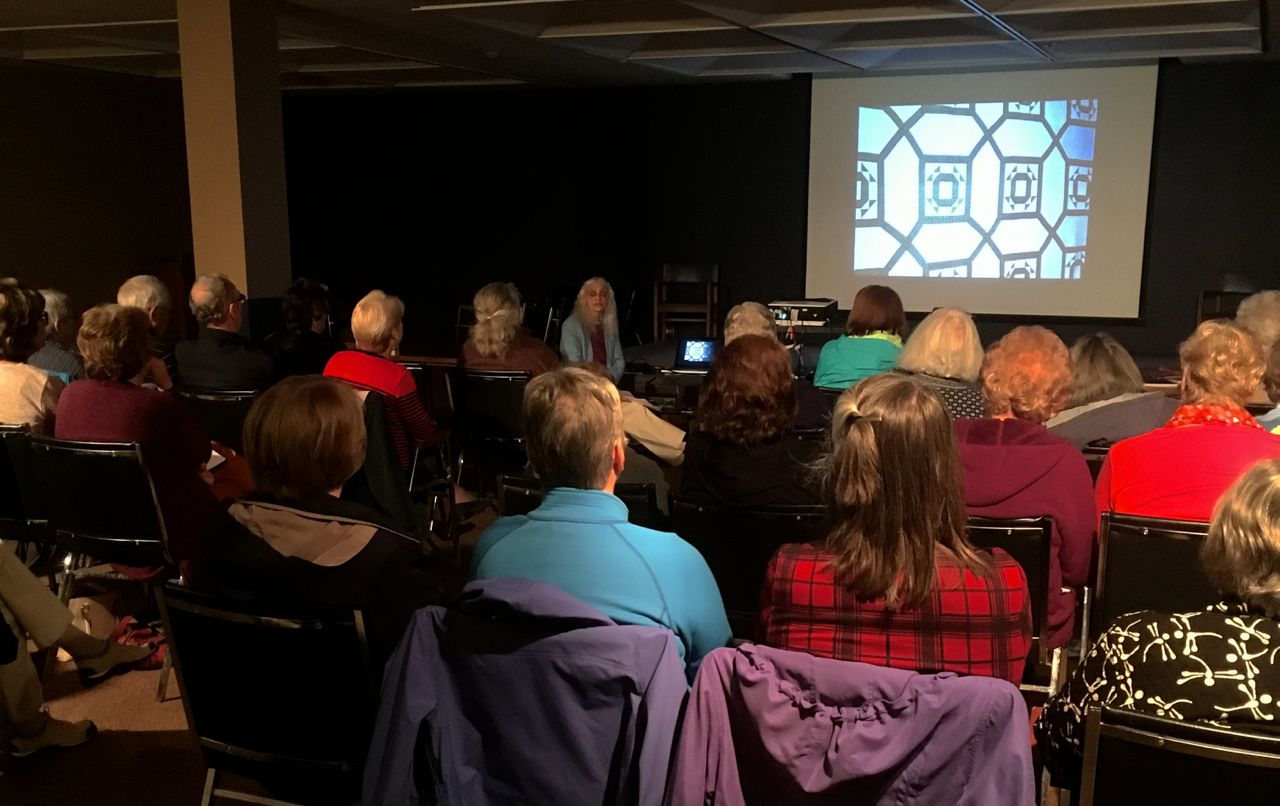
My lectures and workshops focus on quilt history. Contact info is below. Let's plan an event!
*** I am currently teaching virtually only. ***
"That was the most interesting lecture I’ve seen in a long time. I was looking for something different and your lecture certainly fit the bill. I think a lot of quilters are looking forward to what’s next in the quilting world and forget about the incredible history of it all. Thank you so much for an amazing talk and I hope to learn more from you again."
Linda Evans, Program Chair, Quinobequin Quilters, MA"Wow! What a lot of information to absorb! Thank you for a wonderful presentation Monday evening. Everyone really enjoyed it and we will certainly be better observers of quilt details. The evolution of dyes was amazing. Thank you."
Country Star Quilt Guild, FL
Video Introduction

Preserving Our Quilt Legacy
Virtual Workshop
Full Workshop: You can meet me on the *** Other learning options are described on my |
Lectures, Virtual
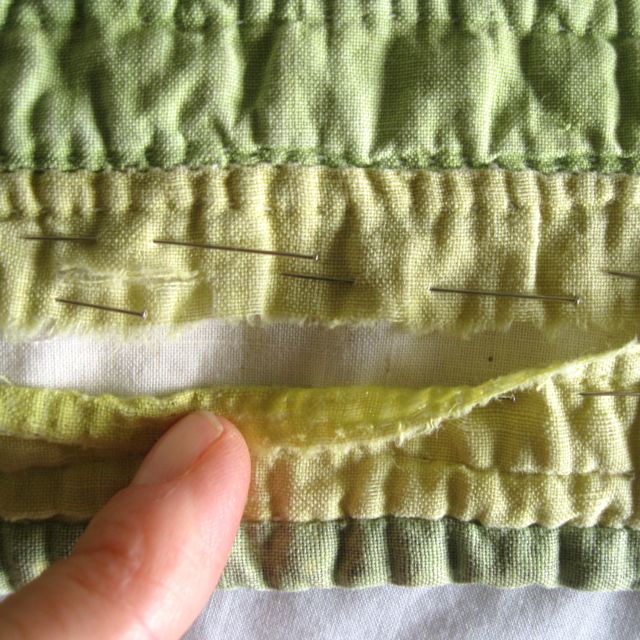 |
"Quilt Repair Tales" Ann will share stories from 40 years of adventures repairing quilts. There are both the family history stories embodied by the quilts she has worked on, and the stories of the thought processes and guidelines for deciding which techniques to choose. Topics include the why’s and how’s of restoration, conservation, rebuilding severely damaged quilts, and more. There will also be tales of why to decide to do nothing at all and love your quilt just the way it is. This workshop pairs well with the "Quilt Triage" workshop. Triage provides an assessment of age, condition, repair options, and care options. Each participant will need to email me a set of photos of their quilt(s), and I will prepare a presentation of the slides for all of us to see and discuss. |
 |
"Saving History One Quilt at a Time” This lecture spotlights a name-inscribed quilt made in the 1890s that I researched to learn more about its history. I have lots of tales to tell - interesting stories about the people named on the quilt, the repairs I made to the quilt, and the journey the quilt and I have had from having it gifted to me to being part of a weekend gala bringing the quilt to the back to its home. |
 |
"Quilters of the 1800s: American Women Creating Art at Home" Historically, a woman's expression of her artistic talents were confined mostly to the home and often to the needlearts. This lecture begins by exploreing quiltmaking in the context of the family, of groups of women, and of society as a whole. Since the 1970s, antique quilts have taken on a new role as they began to be hung on the wall and appreciated as art objects. The talents of anonymous quiltmakers of the 1800s are discussed in this context in terms of color, balance, design, etc. |
 |
"How Old Is It? Dating Antique Quilts" For most quilt collectors, knowing the ages of their quilts is very important. The fabrics used in a quilt hold the most direct information on age. A large part of this lecture is devoted to the history of fabrics, dyes, and printing techniques. Other factors, such as pattern, size, batting, etc., that can add to the determination of a quilt's age are also discussed. Along the way, there will be some special historical connections and stories. |
 |
"Quilts as Historic Documents" Every quilt can reveal many things about its maker, and the social and economic milieu in which she lived. This lecture takes a look at the American quilt as a window to American history. |
 |
"Quilts Reinterpreted" There is an amazing variety of fabric artistry that occurred as the needlework styles and techniques brought to the Americas from Europe were variously used and adapted by many different cultures. Indigenous and immigrant and enslaved peoples each blended new ideas with their own needlework techniques and traditions, and created new forms, styles, and ideas, creating a swirl of mutual inspiration. Groups whose artistry is presented include the Amish, African Americans, and indigenous peoples such as Hawaiians, Seminole, and Woodland cultures. |
 |
"Art or Craft? One Quilter's Journey" The art world distinguishes between fine art, fine craft, and craft. Quilters trying to enter the art world find themselves caught up in this discussion. I begin with an overview of the traditional place of quilts in the craft category, and the more recent appearance of quilts as art. What does it mean to be an artist? Does it really matter? I then describe the path my own quiltmaking has taken as I try to answer these questions for myself. |
 |
"Quilting: An American Art Form" or "Pioneer Ladies and Their Quilts" A short overview of American quilts. For local engagements only. I show 10 antique quilts to illustrate some basic ideas about the history and techniques of quiltmaking. A good introduction for school groups, luncheon programs, and such. |
Workshops, Virtual
 |
"Quilt Triage" If you have a family heirloom or have purchased a quilt you adore, this workshop will give you the opportunity to have me assess it for future care. Triage provides an assessment of age, condition, repair options, and care options. You may also enjoy attending without showing a quilt to see what treasures your friends bring and learn about the fabric history and stories that quilts hold. Your group’s own private quilt show! Each participant will need to email me a set of photos of their quilt(s) at least two weeks prior to our session. Photo instructions will be included with the workshop contract. I will prepare a presentation of the slides for all of us to see. I can discuss 3 to 5 quilts per hour. Contact me to create a workshop length that matches the size of your group and number of participants you predict. The fine print: This workshop pairs well with the "Quit Repair Tales" lecture. See lecture description above. This workshop is designed for guilds, quilt study groups, quilt shops, antique shops, or groups of friends. Individuals may register for private sessions at my Square shop. Note: This workshop will not include appraisals. For that, you need to locate a certified appraiser. I will provide a handout with some leads to appraisers. |
 |
"Discover Your Creativity" This class is directed towards those with some quilting experience who would like to "do their own thing", but don't know how to start. We'll do some color and design exercises to help unlock creative talents. In the workshop, each student will learn how to pose a "problem" to solve in her next quilt. Various techniques of design and construction will be presented, according to each student's skill level and the qualities of the basic idea behind her quilt. Design styles can range from using traditional blocks, varying or combining traditional blocks, original block design, quilts not structured in blocks, to designing while sewing, and so on. The class will deal mainly with designs and mockups. Some students may begin sewing, but this should not be expected. The class begins and ends with each student sharing her source of inspiration and the quilt design she is developing from it. |
How to Contact Me for Lectures and Workshops
Contact me, Ann Wasserman, at annquilts@comcast.net.
I will send you more complete information on scheduling, supply lists, room set-up requirements, and fees.
Home Book Art Quilts About Quilt Repair Mending and Lessons Lectures and Workshops Quilt History Costumes Resumé Contact
Website created and maintained by Ann Wasserman.
Contents of this site may not be reproduced without permission.
All artwork, electronic images, and text are copyright ©2026 by Ann Wasserman.